Routing & Hot Crack Sealing from Gopher State
Asphalt is renowned for its durability, but no pavement is entirely invincible, especially when subjected to the extreme climate swings of Minnesota. At Gopher State Sealcoat, we often tell our commercial property owners that asphalt damage doesn’t happen overnight. It begins with a microscopic vulnerability that, over time, turns into a major liability.
Whether you manage a sprawling retail parking lot or a network of municipal pathways, asphalt crack routing and sealing is the first line of defense against structural failure. Our comprehensive Routing & Crack Sealing Solutions guide breaks down why cracks form, the critical difference between routing and sealing, and how proactive maintenance saves Twin Cities businesses thousands of dollars in premature replacement costs.
Our Process for Excellent Crack Sealing Performance
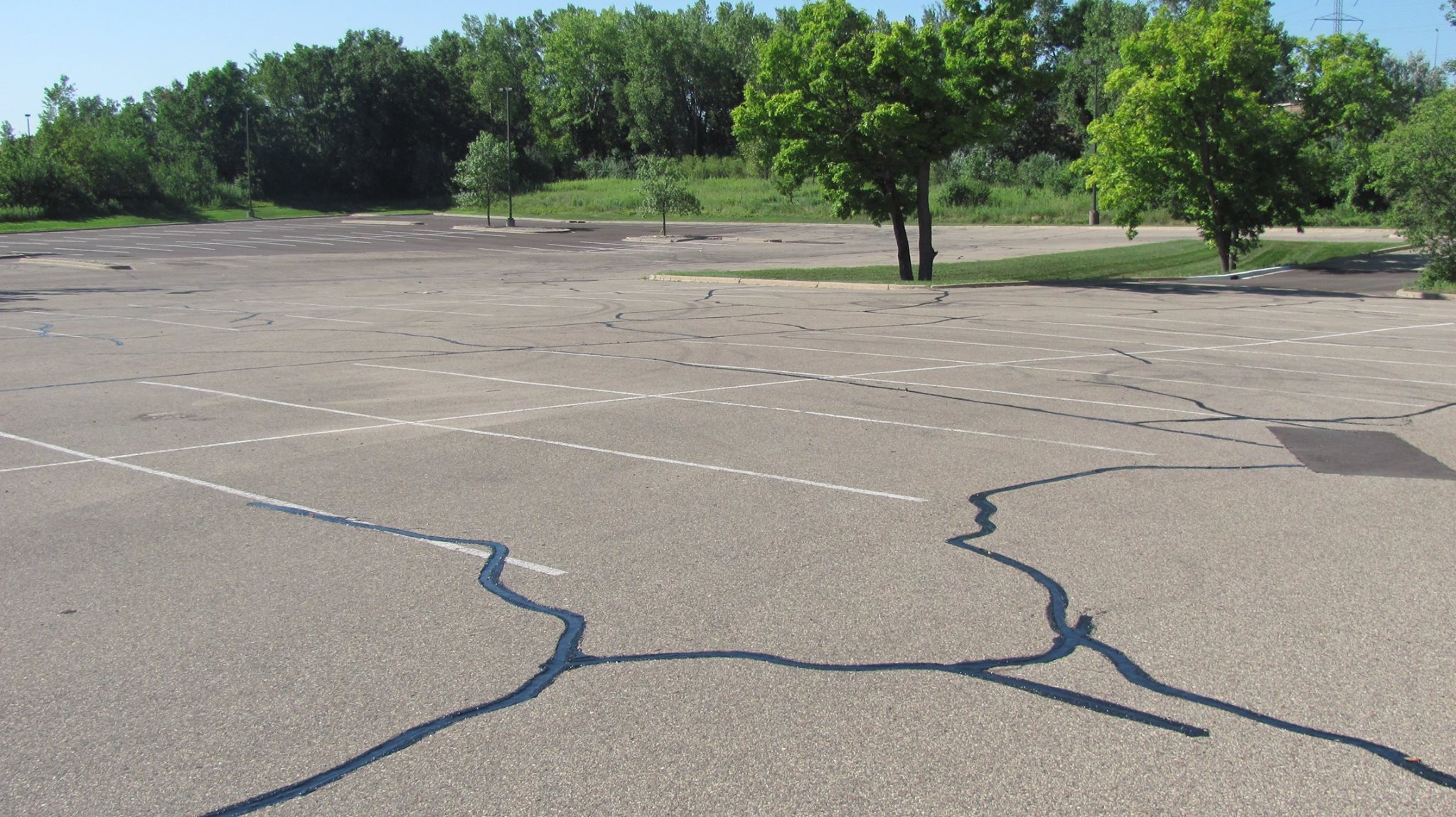
First, we rout the existing cracks to create a clean-cut reservoir which aids in effective bonding and proper application of the sealant. Routing a crack before sealing it allows the rubber in the crack to expand and contract with Minnesota’s severe temperature fluctuations and the ground’s movement.
Next, the crack is cleaned out using high-pressured air to ensure bonding between the pavement and crack sealant. Gopher State Sealcoat uses Mn/DOT Spec 3723 rubber sealants, the same product used on highways. We will use either a bander or a melter wand to apply the sealant, depending on the particular commercial project. Once the hot sealant cools it may naturally settle.
Over time, cracks may need to be touched up. However, routed cracks cannot be routed again, only refilled. This is why, with our process, we ensure the cracks in your commercial asphalt are repaired properly the first time.
Routing and hot crack sealing can extend the life of your Minneapolis property’s asphalt and save you from costly replacement.
Why Do Cracks Form in Twin Cities Asphalt?
Living in the Minneapolis and St. Paul metro means accepting a fifth season: construction. But what causes commercial pavement to degrade so rapidly in the Midwest? The answer is a relentless combination of mechanical stress and Mother Nature.
- The Freeze-Thaw Cycle: As temperatures fluctuate, moisture from rain and melting snow seeps into microscopic surface imperfections. When temperatures plummet, this trapped water freezes and expands, forcing the asphalt apart. When it thaws, it leaves a larger void. Over a single winter, a tiny fissure can easily expand into a treacherous pothole.
- Snow Plow Damage: Snow plows are the undeniable heroes of Minnesota winters, but their heavy, scraping steel blades take a toll. Repeated plowing can catch the edges of unsealed cracks, ripping chunks of asphalt away and rapidly worsening existing faults.
- UV Degradation: During our sweltering, humid summers, intense ultraviolet rays bake the pavement. This UV exposure breaks down the carbon bonds and asphalt binders, causing the pavement to become brittle, faded, and highly susceptible to cracking under the weight of heavy vehicle traffic.
- Heavy Traffic & Age: Constant pressure from delivery trucks, semis, and daily commuter traffic inevitably causes asphalt to shift, resulting in fatigue (or “alligator”) cracking over time.
The Difference Between Crack Routing and Crack Sealing
While often grouped together, routing and sealing are two distinct, sequential steps in a professional asphalt maintenance plan. Slapping liquid sealant over a jagged crack is a temporary band-aid; routing and hot crack sealing is a long-term structural solution.
1. Asphalt Crack Routing (The Preparation)
Routing is the process of using a specialized, heavy-duty machine to physically grind out and widen an existing crack. By cutting a uniform groove (or channel) along the length of the fault, we create a clean, consistent reservoir.
Why is this step so critical? A routed reservoir ensures that the crack has smooth, clean walls for the sealant to adhere to. More importantly, it creates enough physical volume to hold an adequate amount of rubber sealant, allowing the material to properly expand and contract with the shifting Minnesota ground. Note: A crack can only be routed once. In future years, previously routed cracks simply need to be refilled.
2. Hot Crack Sealing (The Protection)
Once the crack is routed, our technicians use high-pressure air blowers and wire brushes to eradicate all dirt, debris, and vegetation from the channel.
Next comes the sealing. At Gopher State Sealcoat, we do not use inferior cold-pour fillers, relying instead on professional-grade materials. We apply Mn/DOT Spec 3723 rubber sealant, the exact same heavy-duty hot rubber used to protect Minnesota highways. Heated to extreme temperatures, this rubberized asphalt is injected into the routed channel using a melter wand or bander. Once cooled, it forms a pliable, watertight bond that flexes with the pavement.
How Hot Crack Sealing Prevents Long-Term Damage
Investing in hot crack sealing is the most cost-effective decision a commercial property manager can make. Here is how this precise process safeguards your investment:
- Stops Water Penetration: By forming a watertight seal, hot rubber prevents moisture from reaching the vulnerable sub-base of your parking lot. If the base layer remains dry, it cannot wash away, erode, or freeze and expand.
- Prevents Potholes: A sealed crack stops the chain reaction that leads to potholes, protecting vehicles from alignment damage and shielding your business from liability.
- Reduces Tripping Hazards: An unkempt, cracked commercial sidewalk or walkway is a safety risk for customers and employees. Keeping your asphalt level and sealed minimizes accident risks and ensures ADA compliance.
- Saves Thousands in Replacement Costs: Proactive routing and sealing extends the life of your asphalt by years, delaying the need for highly disruptive and expensive full-scale mill-and-overlay resurfacing.
Commercial Procurement: Hiring the Right Crack Sealing Vendor
For facility managers, HOA boards, and commercial property owners, procuring asphalt maintenance is a major budget item. Knowing what to look for when assessing your pavement and comparing vendor bids ensures you get a lasting repair rather than a temporary band-aid.
What to Look for When Assessing Your Asphalt
Before requesting bids, walk your lot to understand the scope of the damage. Keep in mind that not all cracks are candidates for routing and sealing:
- Linear and Transverse Cracks: Distinct cracks that measure between 1/4 inch and 1 inch wide are prime candidates for routing and hot rubber crack sealing. Catching these early is the key to preventative maintenance.
- Alligator Cracking: If the pavement looks like shattered glass or the scales of a reptile, this indicates a failure in the sub-base. Crack sealing will not fix this; these spider-webbed areas require saw-cutting, removal, and full-depth asphalt patching.
What Affects Crack Sealing Pricing?
When you receive an estimate, several variables influence the final cost of a commercial crack sealing project:
- Linear Footage & Preparation: Pricing is heavily driven by the total linear footage of cracks. Furthermore, a bid that includes mechanical routing requires specialized machinery and more labor than a bid that simply blows dirt out of the crack and pours cold liquid over it. (We strongly advise against the latter for commercial properties).
- Traffic Control & Phasing: If your business operates 24/7 (like a hospital, retail center, or distribution warehouse), the project will need to be phased. Barricading sections, safely rerouting customer traffic, and performing work on weekends or overnight will factor into the procurement cost.
- Material Volume: Wider and deeper routed reservoirs consume significantly more blocks of hot rubber material to achieve a proper, flush seal.
Evaluating Vendor Bids
When comparing asphalt contractors in the Twin Cities, do not base your decision solely on the bottom-line price. Ask your vendor what specific materials they are quoting. Are they utilizing a heated, commercial-grade melter with Mn/DOT Spec 3723 rubber? Do they explicitly include mechanical routing in the proposal? Finally, always verify that the contractor carries adequate commercial liability insurance and workers’ compensation to protect your property and business during the project.
As a general rule of thumb, commercial parking lots should be visually assessed every spring and fall, with new crack routing and sealing performed every 1 to 3 years to address new faults as the pavement naturally ages.
When is the Best Time to Route and Seal Cracks?
In Minnesota, timing is everything, so it pays to plan ahead. For maximum effectiveness, the pavement needs to be completely dry, and the ambient temperature should be consistently above 50°F.
- Spring (The Post-Melt Assessment): Spring is ideal for repairing the fresh damage caused by the brutal winter freeze-thaw cycle and snow plow impacts. Addressing these cracks early prevents heavy spring rains from washing out the pavement’s base.
- Fall (Winter Prep): September and October are the final opportunities to “batten down the hatches” before the snow flies. Sealing cracks in the fall ensures your parking lot is locked tight against impending ice, de-icing salts, and plow blades. While active repair is paused when snow is heavy, well-sealed pavement can easily withstand winter weather.
FAQs – Routing & Crack Sealing
What are the main benefits of asphalt routing and crack repair?
In addition to immediately improving the safety and visual appeal of your asphalt surface, routing and crack repair drastically increases the lifespan of your pavement. By stopping water infiltration at the surface, you preserve the foundation of your lot, saving you from expensive, full-depth replacement for years to come.
Can I repair asphalt cracks myself?
While hardware stores sell cold-pour DIY patching liquids, they provide only temporary, superficial fixes. Professional routing requires heavy machinery to create a uniform bonding reservoir, and our Mn/DOT Spec 3723 rubber sealants must be heated to extreme temperatures in specialized melters to create a permanent, flexible, watertight bond.
How long do we need to keep vehicles off the freshly sealed cracks?
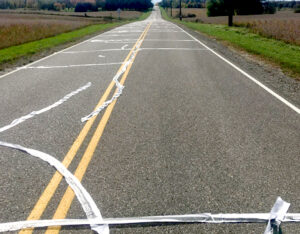
Unlike a full parking lot sealcoat (which typically requires 24-48 hours to cure), hot rubber crack sealant sets and cools very quickly, often within minutes to a few hours. In high-traffic commercial situations, barrier paper can be applied over the freshly sealed cracks to prevent tracking, allowing your business to remain open with minimal disruption.
Will salt and winter de-icers ruin my crack sealing?
Rock salt and harsh chemical de-icers can cause pitting and deterioration on bare asphalt, which is why sealcoating is highly recommended. However, the commercial-grade hot rubber we inject into routed cracks is incredibly resilient and designed specifically to withstand Minnesota’s heavy chemical and salt applications during the winter.