Commercial Asphalt Sealcoating
Minneapolis & St Paul Sealcoating Expertise
Asphalt emulsion sealcoating is one of Gopher State’s staple services. Sealcoating is a protective layer of coal tar or asphalt-based emulsion applied to the surface of your pavement. Think of it as sunscreen for your asphalt; it shields the surface from UV rays, oil spills, water penetration, chemical spills, and more. It acts as a preservative layer to your asphalt pavement, protecting it from external elements including sunlight radiation oxidation, moisture penetration, oil, and even excessive salt, all of which can compromise the asphalt’s integrity.
Stand Up to Heavy Traffic on Commercial Pavement
Commercial lots endure significantly more abuse than residential driveways. Wear and tear are the most common reasons why asphalt cracks develop, and if your property plays host to large or heavy vehicles, such as semis or work trucks, you need even more asphalt upkeep to handle that extra weight. To combat this, we only use sealcoat that has specialized polymers hot-blended into the mix to increase both its elasticity and lifespan. This method of sealer mixing is what sets us apart from the competition and the standard products you may find in box stores, ensuring it can handle the constant pressure and weight of commercial vehicles.
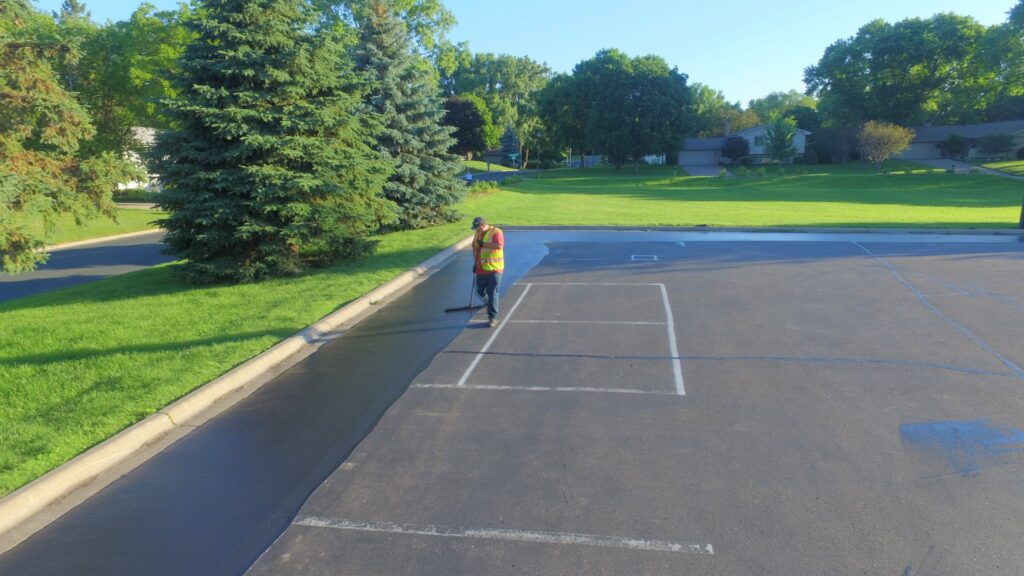
Our sealcoating process begins by thoroughly cleaning every part of the asphalt surface with high-pressured air, wire-bristle brooms, and when applicable, a sweeper. This step is essential as without a clean surface, the sealcoat will prematurely peel and erode.
Though cleaning is the backbone of sealcoating, the application plays a vital role in how long the protective layer will last. To give you the best results, we pride ourselves on hand applying our sealer on edges and spraying or using a spreading machine to complete our projects. This allows us to achieve not only an aesthetically appealing finish, but also gives us more control in applying the correct amount of sealcoat.
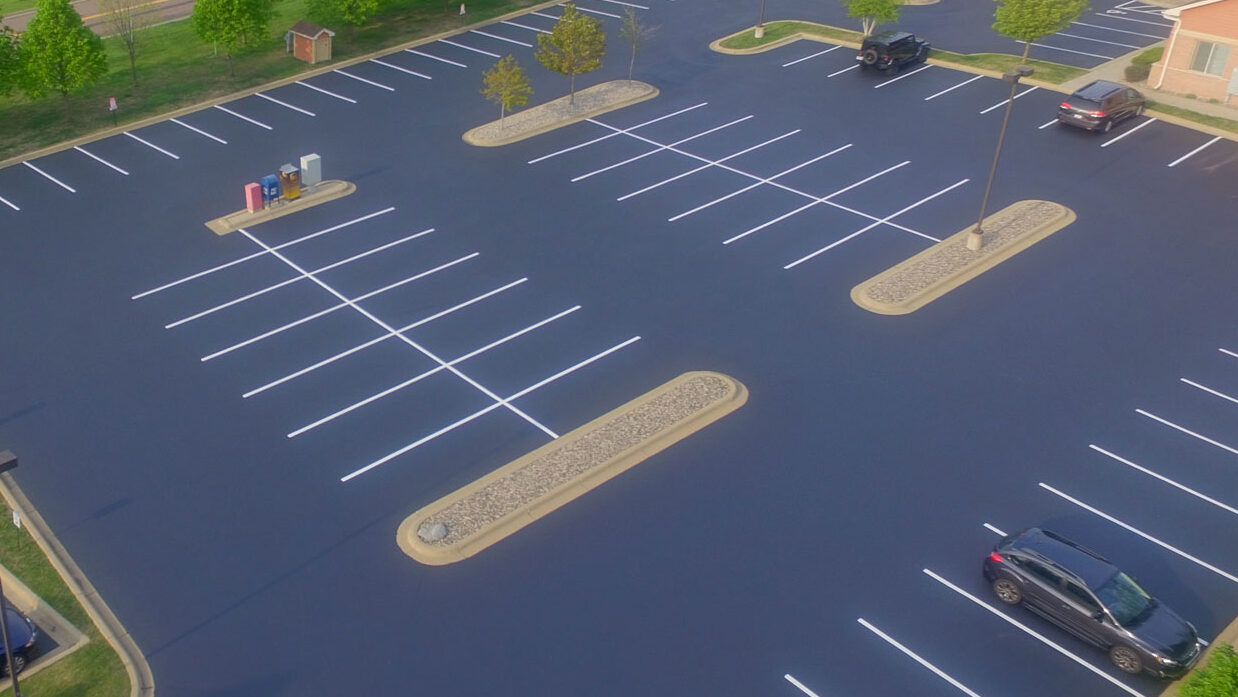
After the edges are finished, we utilize large tank spray rigs and/or squeegee machines to protect the remainder of the asphalt with sealcoat. To guarantee that the sealcoat dries and cures completely, we recommend staying off the asphalt for at least 24 hours. This will allow the sealcoat to properly set and increase its longevity.
Our Professional Application Process & Minimizing Business Disruption
Of all the asphalt emulsion sealers offered in Minnesota, we only use sealcoat that has specialized polymers hot-blended into the mix to increase both its elasticity and lifespan. To ensure the quality of our product, we provide our customers with locally-sourced sealcoat.
- Pre-Planning & Logistics:
We understand that your time is valuable, and we don’t want you to wait any longer than you have to for your lot to be usable again. In order to get the job done right without shutting down your operations, our staff will work to make a plan with you ahead of time, addressing both your needs and the overall schedule. - Cleaning and Prep:
Our sealcoating process begins by thoroughly cleaning every part of the asphalt surface with high-pressured air, wire-bristle brooms, and when applicable, a sweeper. This step is essential as without a clean surface, the sealcoat will prematurely peel and erode. In addition, we make sure to position barricades to monitor traffic in the area, allowing us to safely manage vehicle flow while we work. - Application:
To give you the best results, we pride ourselves on hand applying our sealer on edges and spraying or using a spreading machine to complete our projects. After the edges are finished, we utilize large tank spray rigs and/or squeegee machines to protect the remainder of the asphalt efficiently, ensuring the fastest possible turnaround time so you can get back to business. - Curing:
Once applied, asphalt sealcoat needs time to dry. Typically, 36 hours will do the trick.
Sealcoating vs. Asphalt Resurfacing: What Do You Need?
Property owners in Minneapolis and St. Paul often struggle to decide between sealcoating and resurfacing, two essential processes that play very different roles in pavement care. It is essential to know when asphalt needs to be repaired versus replaced. Sealcoating is a cost-effective method that extends the lifespan of your property’s asphalt and protects against degradation. However, if the damage goes deeper—such as widespread alligator cracking or a sinking foundation—asphalt resurfacing provides the structural support your pavement requires.
The Financial and Aesthetic ROI for Businesses
Sealcoating is a multi-purpose asphalt-sealing process that provides a bevy of benefits to your commercial asphalt, coming with the bonus ability to save you and your business money by bolstering your property’s surfaces. Once cracks start to appear in an asphalt surface, they can be much more expensive to fix than simply having a sealcoat applied.
Beyond the financial savings, appearances go a long way in the Twin Cities business game. Whereas torn, cracked commercial asphalt can project an image of disorder, clean smooth asphalt provides a tidy environment that will draw in customers and encourage them to come back. A professionally applied sealcoating will protect your asphalt and make it look fresh and new again!
The Business Case: Curb Appeal and Customer Satisfaction
A well-maintained parking lot isn’t just about aesthetics; it’s also about access and customer satisfaction. When you’re running a business in the Twin Cities, MN area, a well-maintained parking lot can be the difference between a busy customer base and a veritable ghost town. In today’s market, aesthetics are a necessary business strategy, and professionally applied parking lot sealcoating can do wonders to help boost your business’s ever-important visual appeal. Customers who don’t need to think about parking can enter your business with a clear mind and purpose, while a lot full of potholes and fading lines can lead to frustrated drivers and snap decisions that put vehicles and pedestrians at risk.
When is the Best Time to Sealcoat in Minnesota?
The best time to have your sealcoating project performed is from May until the end of September.
- Spring:
As winter progresses, your parking lot endures snow plowing, applications of sand, and the seasonal ups and downs of the freeze/thaw cycle—meaning it may require extra attention when spring arrives. - Summer:
Summer is the best time of year to have professional sealcoating performed, but only if the temperature is right—at a minimum, 50° F and rising. Hot weather is actually the best when it comes to sealcoating because it helps dry and cure the freshly applied sealcoat quicker. - Fall:
September is the perfect lull between summer and fall to invest in sealcoating, as temperatures are generally warmer and more predictable than later in the season. However, the late fall months bring more varied weather patterns including rain, cooler temperatures, and an occasional early snowfall, which can directly impact the ability of asphalt sealcoat to properly set.
Defending Against the Elements: Sun, Snow, and Salt
- UV Damage:
In the heat of the summer, asphalt often suffers from the intense rays of the sun. Over time, the carbon bonds within the asphalt will break down, leaving the asphalt especially vulnerable to cracks or chips. Sealcoating asphalt isn’t just for protecting your property against water; it can also act as a shield against brutal UV damage. - Winter Chemicals:
Snow and ice aren’t the only substances that accumulate on your parking lot during the winter; along with sand and deicing materials, there’s a wide variety of other harmful substances which will gradually permeate and deteriorate your asphalt. - The Freeze/Thaw Cycle:
Once winter rolls around, a commercial sealcoating will keep your asphalt protected from the melting and freezing cycle.
Sealcoating Frequently Asked Questions
Sealcoat is made up of a binder, which is applied to the surface of your asphalt. Products produced can range from cold mixed to hot-colloidal suspension blended. And while both processes can turn your pavement black, it is the hot-colloidal blending that merges all the chemicals together to keep out excess water.
Once cracks start to appear in an asphalt surface, they can be much more expensive to fix than simply having a sealcoat applied. Rather than waiting to repair problems, focus on preventing future damage.
Generally, it takes between 24 and 48 hours for sealcoat to cure completely. To guarantee that the sealcoat dries and cures completely, we recommend staying off the asphalt for at least 24 hours.
Before sealcoating any paved surface, it’s important to make sure that the area is as clean as possible. This includes removing dumpsters, planters, and any excess vegetation. Though even if you do not clean it perfectly, we will be happy to prep the asphalt surface for you.